Botulinum toxin injections have become a routine part of facial aesthetics and, in the right hands, a predictable way to soften expression lines without freezing personality. The treatment is deceptively simple on the surface: a few well-placed microinjections that relax overactive muscles. The real craft lives underneath, in mapping anatomy to match each face’s movement patterns, then dosing to dial down lines while keeping natural expression. What follows is a practical tour of the most treated areas of the face, how a certified Botox injector plans and performs them, and what patients can reasonably expect from professional botox injections.
How botulinum toxin actually smooths lines
Expression lines form where muscles repeatedly fold the skin. Over years, the creases become etched, especially in thinner skin over the forehead and around the eyes. Botulinum toxin type A works by temporarily blocking acetylcholine release at the neuromuscular junction. The muscle relaxes, the fold lessens, and the skin can reflect light more evenly. The effect starts to appear around day two or three, peaks between days 10 and 14, and gradually fades over three to four months for most people. Some hold results closer to five months, particularly at lower-movement sites, while fast metabolizers and heavy exercisers may notice a shorter arc.
Dosing is measured in units, and unit-for-unit equivalence varies across brands, so your injector’s plan should reference the specific product used. For standard cosmetic botox treatments in the upper face, total doses commonly fall in the 20 to 60 unit range, but good practice is to personalize rather than chase a number.
The forehead: smoothing horizontal lines without dropping the brows
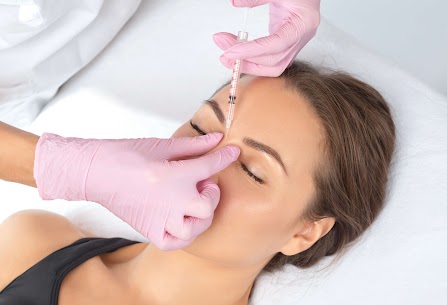
Forehead botox is the most requested treatment after frown lines. The frontalis muscle lifts the brows and wrinkles the skin horizontally from hairline toward the brows. Its fibers are thin and broad, and the skin is mobile. Over-treat it, and the brows can feel heavy. Under-treat it, and the lines persist.
The map usually spans from just above the brows up toward the hairline, with injections spaced horizontally. Dose ranges vary widely because heads vary: a petite forehead with fine skin may only need 6 to 10 units, while a tall, expressive forehead might require 12 to 20 units or more. The key judgment is how active the glabella area is. If the brow depressors, especially the corrugators and procerus, are strong, your injector should address those first, then sculpt the forehead. Treating the frontalis alone can worsen brow heaviness because the lifter is weakened while the depressors pull unopposed.
In practice, I often start conservatively in first-time patients, then fine-tune with a touch up at two weeks. This staged approach guards against the most common complaint in forehead treatments: a flat or heavy look. The goal is subtle botox results that lift the brightness of the upper face while keeping the brows mobile enough to show interest and warmth.
The glabella: frown line botox that softens the “11s”
The glabellar complex is the workhorse of cosmetic botox. Those vertical frown lines, the “11s,” are formed by the corrugator supercilii and procerus muscles. Most adults who scowl when they read or concentrate have some degree of etching here. Glabellar botulinum toxin injections have been studied for decades, and dosing guidelines are well established. Typical plans range from 12 to 25 units, divided into five points. Stronger muscles, deeper lines, and male patients often require higher totals.
Two technical details matter to safety and Ashburn VA botox outcome. First, injection depth should reach the muscle layer to ensure effectiveness while avoiding intravascular injection. Second, the lateral corrugator points should be placed high enough to prevent unintended spread to the levator palpebrae, which can cause eyelid droop. This complication is rare when a certified botox injector follows anatomical landmarks, but it’s discussed at every botox consultation because informed consent is part of safe botox treatment.
Results here can be striking. Many patients look less stern within a week, and that softening often changes how people respond to them at work or in photos. If static grooves remain, complementary treatments such as hyaluronic acid fillers or skin resurfacing can improve the etched component after the muscle is calmed.
Crow’s feet: brightening the eye corner while preserving a genuine smile
Lateral canthal lines, better known as crow’s feet, are fan-shaped because the orbicularis oculi encircles the eye and squeezes the skin with every smile and squint. Crow feet botox typically involves three to five superficial injection points per side, set just lateral to the orbital rim. Total per-eye dosing often runs 6 to 12 units. The balance to strike is simple to say and nuanced to execute: soften wrinkles while keeping the smile authentic.
Where I frequently adjust the plan is for patients who have lower-lid laxity or a tendency toward cheek flattening when the orbicularis oculi is relaxed too much laterally. In those cases, I reduce the most inferior points or shift them slightly posterior. For patients who struggle with eye makeup smudging or rapid crow’s feet recurrence from frequent outdoor sports, I might lean toward the higher end of the dosing range. If under-treated, lines will fade slightly but return quickly. If over-treated, smiles can look tight at the corners. The sweet spot is individual.
Bunny lines: softening the scrunch on the nose
When the glabella and crow’s feet are treated, some patients notice new diagonal creases on the sides of the nose. These “bunny lines” are created by the nasalis and levator labii superioris alaeque nasi. They are straightforward to treat with a couple of small injections per side, usually 2 to 4 units per point. It is a minor add-on, but it matters for harmony. Without it, the upper face can look smooth except for an odd pinch at the bridge of the nose.
Brow shaping: microdosing for a subtle lift
The brow’s position reflects the tug-of-war between lifters and depressors. Strategic points just under the tail of the brow and in the lateral orbicularis can open the eye by 1 to 2 millimeters, a difference that seems minor on paper but reads as refreshed. This is not a one-size lift. Short foreheads, heavy lids, and previous brow surgery change the plan. Microdoses, often 1 to 2 units per point, placed with care, can create a light, natural looking botox effect that pairs beautifully with forehead and glabellar treatments.
Lip flip: a small adjustment with outsized perception
A lip flip relaxes the upper orbicularis oris, allowing the pink of the upper lip to show a bit more, especially at rest. It is not a replacement for volume; it is an alternative when the goal is a soft roll rather than fullness. Typical dosing is very low, often 4 to 8 units divided across the cupid’s bow and lateral segments. Too much product can interfere with drinking from a straw or pronouncing “p” and “b” for a few days. For patients curious but cautious, baby botox dosing can give a trial run that fades quickly if they do not enjoy the feel.
Dimpled chin and pebbled texture: relaxing the mentalis
The mentalis pulls the chin upward and can create a pebbled or orange peel texture when overactive. Small, deep injections, usually 6 to 10 units total, smooth the skin and soften an overly prominent chin crease. In patients who recruit the mentalis to close the lips due to dental occlusion issues, the effect is both aesthetic and functional, reducing strain.
Gummy smile moderation: a targeted smile line tweak
Some smiles show more gum than a patient likes. If the cause is hyperactivity of the levator labii superioris alaeque nasi and related elevators, a few strategically placed units can lower the upper lip during smiling. Dosing is conservative, often 2 units per side, with careful placement to avoid an asymmetric or heavy effect. This is a classic example of preventive botox used for expression refinement rather than wrinkle treatment.
Jawline contouring and lower-face balance
Although this guide focuses on facial lines, medical botox and cosmetic botox frequently address masseter hypertrophy, particularly in patients who clench or grind. Reducing the masseter’s bulk with botulinum toxin injections can slim a square jaw over 6 to 8 weeks, with results lasting three to six months. It has dental benefits for bruxism in some cases, though it is not a cure for TMJ disorders. Doses here are higher compared to the upper face, and the anatomy has more variability. This is firmly in the hands of a botox specialist.
For platysmal banding in the neck, a Nefertiti lift pattern can soften vertical cords and define the jawline. While not directly about fine lines, these treatments influence how the lower face reads and are often discussed during a comprehensive botox appointment.
Preventative botox and baby botox: when less is more
Preventative botox, sometimes called preventive botox, uses smaller doses in younger patients to reduce the formation of fixed lines. The intent is not a frozen forehead in your twenties, but a subtle reduction in the microtrauma that creases the skin each day. Baby botox is a related concept: lower unit counts, more diffusion, and a softer effect for those wary of looking “done.” This approach suits expressive professions, endurance athletes who metabolize product quickly, and anyone testing their comfort with botox for wrinkles without committing to full doses.
Planning your map: the consultation that sets the tone
The most valuable ten minutes of any safe botox treatment happen before the first injection. A thorough botox consultation should include:
- Dynamic assessment: raising brows, frowning, smiling, squinting, pursing lips, and speaking, so the injector can see exactly where the skin folds and which fibers activate first. Skin and symmetry review: thickness, photodamage, hydration, and baseline asymmetries that may influence dosing. Medical screening: prior botulinum toxin exposure, neuromuscular disorders, pregnancy or lactation status, medications that increase bruising risk, history of keloids or unusual scarring. Photography: consistent angles for botox before and after comparisons. Expectations: what can improve with botox injections alone, and what may need complementary treatments like resurfacing or filler for etched lines.
An experienced botox provider will outline the specific plan, including botox units per area, estimated botox price, and a maintenance schedule. If a clinic offers botox deals or botox specials, the consultation is still the right place to confirm that the plan suits your anatomy rather than a preset package.
The injection process and immediate recovery
The botox injection process is quick. Most sessions run 10 to 20 minutes. The pain level is low for the majority, often described as a pinch or mosquito bite with a brief sting. Ice or topical numbing can be used but is rarely necessary for the upper face. The botox procedure itself uses tiny needles, and each injection is small volume.
Post-procedure, expect small blebs at each point that fade within minutes. A little redness is common. Bruising is possible, especially near the crow’s feet or in patients on blood thinners or supplements like fish oil and ginkgo. Light makeup after a few hours is fine if the skin is intact. Many providers advise avoiding strenuous exercise, saunas, face-down massages, and tight hats for the rest of the day. While the science on “migration” from movement is debated, these simple precautions keep pressure off treated zones while product settles.
Results timeline, longevity, and touch ups
Botox effectiveness follows a predictable arc. Early changes often appear by day three, then the full effect declares by day 10 to 14. Subtle adjustments, if needed, are typically done around the two-week mark. A good injector welcomes that visit, because it is the easiest way to tailor your pattern and learn your metabolism.
How long does botox last? Most people see three to four months of smoothness in high-motion areas and a little longer in lower-motion sites. Repeat botox treatments at consistent intervals tend to train down overactivity, so some patients can stretch visits after several cycles. Others prefer shorter gaps to keep peak results. There is no one right interval; there is your interval.
Safety, side effects, and risk management
When performed by a certified botox injector, the safety profile is favorable. Common side effects include pinpoint bruising, mild tenderness, and a temporary headache. Less common are asymmetries, a heavy brow from over-treating the frontalis, or eyelid droop from spread into the levator complex. Most such issues are dose related and improve as the product wears off. Severe allergic reactions are rare.
Risk mitigation relies on anatomy knowledge, conservative first dosing, and clear post-care. Tell your injector about all medical conditions, prior botulinum toxin injections, and upcoming events that might heighten your sensitivity to even small asymmetries, such as photography-heavy occasions. If you are pregnant, breastfeeding, or have certain neuromuscular disorders, you should defer treatment. That is part of trusted botox practice.
Cost, value, and how to choose a provider
Botox cost varies by region, injector experience, and whether a clinic charges per unit or per area. In many US markets, per-unit botox price ranges from around 10 to 20 dollars; per-area pricing can bundle common zones like the glabella and forehead. Affordable botox is not necessarily poor quality, and high price is not a guarantee of artistry. What matters is who is placing the product and how they customize the plan.
Look for a botox clinic that takes time to map your muscles, explains botox risks and benefits in plain language, and shows botox before and after photos of work that matches your style. Read reviews to find a top rated botox practice for your needs, but weigh those against your own impression during the consult. A careful, curious injector who asks about your expressions, job demands, and schedule is more likely to deliver natural looking botox.
Special cases and edge scenarios
Patients with very thin skin may see etched lines that botulinum toxin can only partially soften. In those cases, a combination strategy works better: light resurfacing for texture, plus wrinkle botox to reduce movement. For deep forehead lines that persist at rest, spacing out stronger doses rarely helps. Instead, microdroplet filler placed superficially after the forehead calms can make the surface reflect light again.
Athletes who do hot yoga, distance running, or heavy lifting often notice shorter botox longevity. Planning maintenance a bit earlier or using slightly higher doses in high-motion zones can help. On the flip side, patients who move very little may prefer microdosing to avoid looking flat in photos.
If you have a history of brow lifts, blepharoplasty, or thread lifts, tell your injector. Scar patterns and altered vectors change how muscles act, and standard maps may need revision. This is also true for dental changes. A new bite or implant can affect the mentalis pattern and the smile line, influencing lip flip or gummy smile plans.
From map to face: integrating the most common areas
A comprehensive upper-face plan often blends three zones: glabella, crow’s feet, and forehead. In a typical first appointment, I might soften the glabella to reduce the frown, add a conservative dose to the forehead to dampen lines without dropping the brows, and treat the crow’s feet with a pattern that respects the patient’s smile. If the patient scrunches the nose, we add the bunny line points. Two weeks later, we adjust: a couple of extra units to a persistent “11,” a small boost at the outer brow to open the eye, or a withheld point if a smile looks slightly tight. This iterative approach builds trust and gives the most natural, subtle botox effect.
Maintenance and lifestyle: keeping results consistent
Consistency helps. Booking your next botox appointment within your personal longevity window maintains smoothness with fewer fluctuations. Skin care matters, too. Retinoids, antioxidants, and diligent sunscreen guard against the photodamage that deepens lines independent of movement. Good hydration, moderate alcohol, and adequate sleep won’t change the pharmacology of botulinum toxin, but they do influence how your skin looks over the same treatment period.
If you are new to botox aesthetic treatment, consider a test drive. Choose the area that bothers you most, treat conservatively, and build from there. It is https://www.instagram.com/amenityestheticsanddayspa/ better to wish for a touch more at two weeks than to wait three months for an overcorrection to fade.
A brief word on medical and functional uses
While this article focuses on botox for fine lines and cosmetic goals, medical botox is widely used for migraine prevention, hyperhidrosis, spasticity, and other conditions. Some patients first encounter botulinum toxin in a medical setting, then explore cosmetic botox later because they already trust the product. Medical and cosmetic indications have different dosing and mapping, but they share the same core: precision, safety, and respect for anatomy.
What a realistic plan looks like
Consider a common scenario. A 38-year-old patient with moderate glabellar activity, early forehead lines, and crow’s feet that deepen when smiling outdoors. She wants a refreshed look without comments at work. We might plan 18 to 22 units for frown line botox across five glabellar points, 8 to 12 units of forehead botox across six to eight points placed in the upper two thirds of the forehead to keep brows light, and 8 to 10 units for crow’s feet per side. If she scrunches her nose when smiling, add 2 units to each bunny line. Schedule a two-week follow-up for small adjustments. Her botox results should hold for about three to four months, with the option to fine-tune doses at the second cycle based on how she felt at week two and week eight.
For a male patient with thicker skin and stronger corrugators, those glabellar numbers might rise to 24 to 30 units, with forehead dosing adjusted upward or placed slightly higher to preserve brow lift. Men often need more units due to muscle mass, but the finesse remains the same.
When to pause or say no
An ethical, trusted botox provider is comfortable saying not today. If your brows are already low and heavy from fatigue, allergy, or anatomy, forehead treatment may worsen the look. If a major life event is days away, trying a new area is unwise. If you are seeking to erase deep, long-standing etched lines with toxin alone, expectations need recalibrating. And if a botox clinic pushes a package that doesn’t match your anatomy or goals, consider finding a specialist who listens first.
The role of experience and why mapping matters
Great outcomes come from disciplined mapping and small, informed choices. A wrinkle is not just a crease, it’s the visible end of a muscular habit, skin thickness, and light reflection. Professional botox injections respect all three. The best botox treatments read as you on a good day, every day for several months, without calling attention to one fixed feature. That is the standard to aim for.
If you are ready to explore botox for facial lines, start with a consultation. Bring specific concerns and, if useful, photos of yourself when you liked how you looked. Ask about dose ranges, placement rationales, botox safety, and how the provider handles touch ups. You will learn quickly whether the plan is tailored or rote. With the right map, subtle corrections add up to an easy, natural finish that supports how you move through the world.